The Café Lotus: From Warung Teratai to an Ubud Cultural Dining Icon
by Dijiwa Sanctuaries
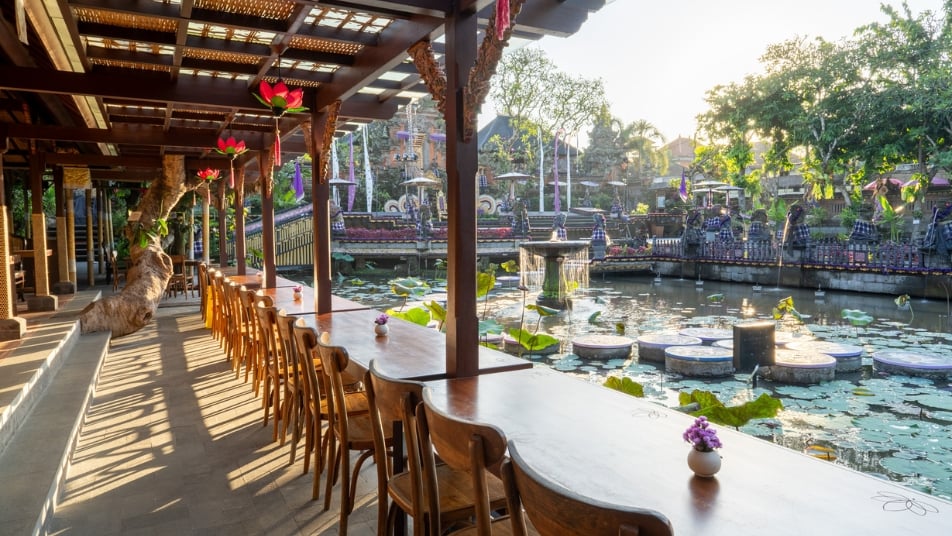
Ubud, Bali — Tucked beside the sacred lotus pond of Pura Taman Kemuda Saraswati, The Café Lotus has quietly grown from a modest local eatery into one of Ubud's most enduring cultural dining destinations. More than four decades in, it remains a place where Balinese cuisine, traditional performance, and the unhurried spirit of old Ubud still feel genuinely at home.
The story begins in 1983, when Anak Agung Arimas, founder of The Café Lotus and wife of the King of Ubud, Tjokorda Gde Agung Suyasa, opened Warung Teratai, a small traditional restaurant and souvenir shop for travelers making their way through central Ubud. The village at that time was still largely untouched by tourism, shaped more by temple ceremonies, rice harvests, and the daily rhythm of Balinese life.
What made Warung Teratai memorable from the start was its sense of place. Sitting within the same cultural landscape as lotus ponds, carved stone gateways, and the gentle sounds of gamelan drifting through the streets, The Café Lotus was never just about the food. Guests arrived for a meal and stayed for the atmosphere, one that felt rooted in something real.
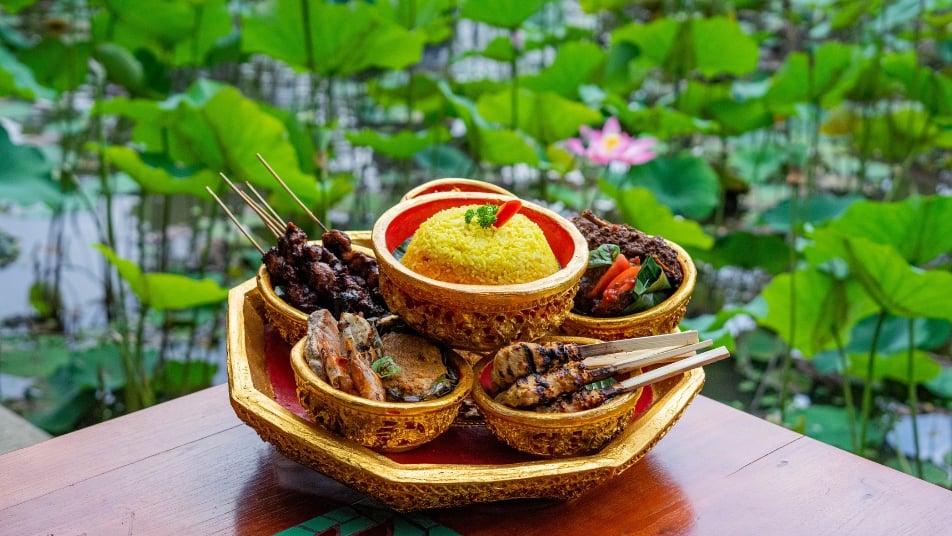
Balinese cuisine became the soul of the restaurant early on. Traditional recipes passed down through generations, local ingredients, and warm family hospitality gave it a distinct identity, while the view across the pond toward Pura Taman Kemuda Saraswati turned every meal into something a little more memorable.
By the 1990s, inspired by the lotus pond that had come to define its character, Warung Teratai had grown into The Café Lotus. The new name was less a rebranding than an acknowledgment of what the place had already become, a restaurant shaped by the beauty of its surroundings and the cultural life of the neighbourhood.
In 2005, The Café Lotus took things a step further by weaving live performance into the dining experience. With the restaurant's stage facing the illuminated temple and lotus pond, guests could enjoy authentic Balinese cuisine while traditional dance and gamelan unfolded before them. It was an evening that did not feel staged. Food, heritage, and performance simply belonged together in that setting.
As Ubud's profile grew on the world stage, The Café Lotus continued to evolve while holding onto what made it worth visiting in the first place. A full revitalization in 2025 brought renewed energy to the space, carefully done, with no compromise to the atmosphere, architecture, or cultural character that guests have known for decades.
"The Café Lotus has always been more than a restaurant. It carries the memory of this place, the pond, the temple, the people who have gathered here for over forty years. Our revitalization in 2025 was not about starting over. It was about making sure the next forty years feel just as true to Ubud as the first," said I Wayan Sudiarta, the Resort Manager of Puri Saraswati Dijiwa Ubud and The Café Lotus Ubud.